A custom home foundation built to standard inland details will look fine for ten years on a coastal lot. Around year fifteen, hairline cracks appear at the column bases. Around year twenty, the rebar starts to weep rust-stains through the finish concrete. Around year twenty-five, the structural engineer is calling for retrofit.
The coast doesn't wait. Here's what we change for every Skyrise foundation in Newport Beach, Laguna Beach, Dana Point, and the rest of the OC coastal strip.
1. Concrete cover over rebar
Inland code minimum is 3/4" cover for interior surfaces, 2" for earth-facing. Coastal Skyrise spec is 2" interior, 3" earth-facing. The extra inch of concrete is the difference between rebar that lasts forty years and rebar that's pitting at fifteen.
2. Rebar specification
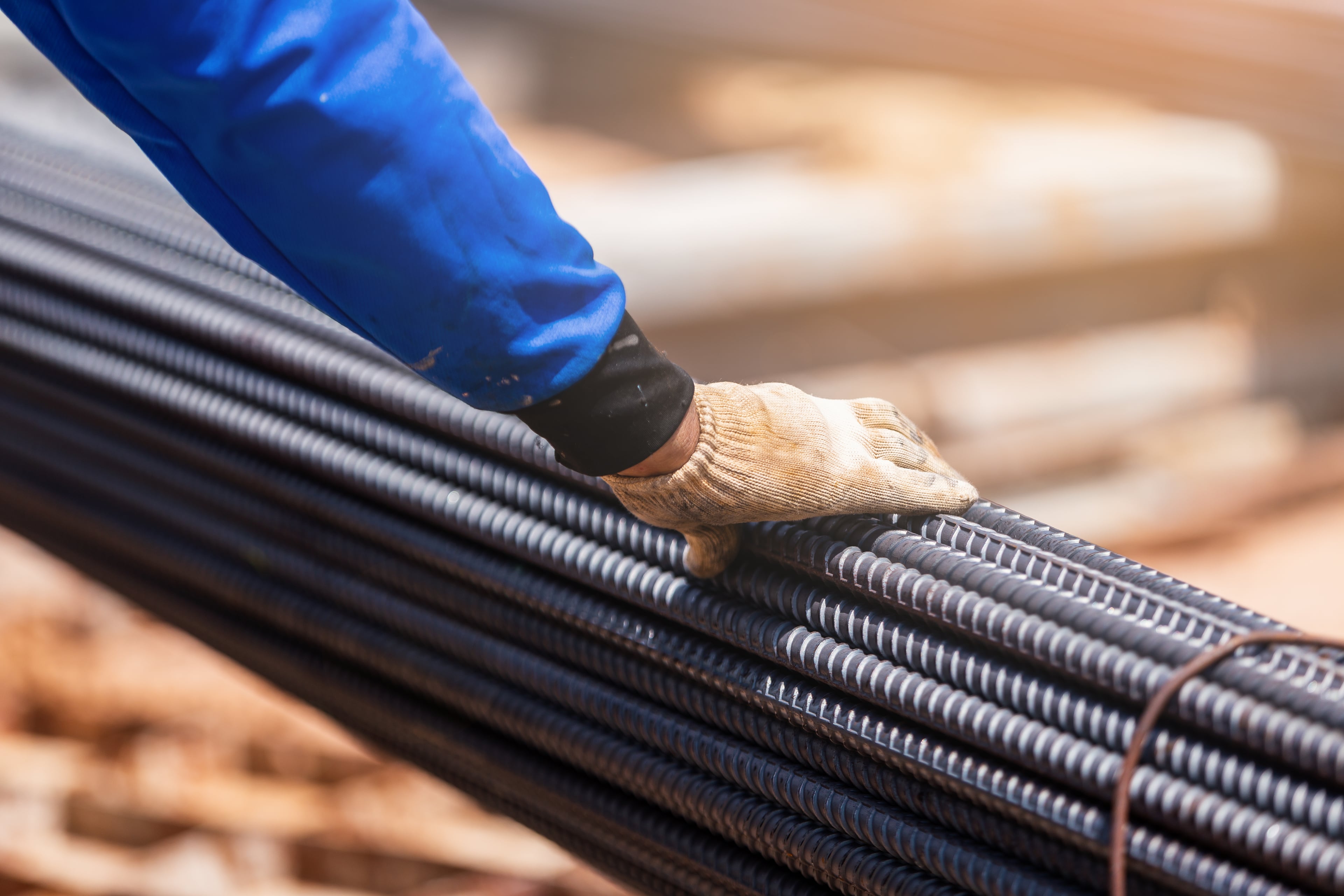
Standard A615 grade 60 is the code default. On coastal lots within two miles of the shoreline, we spec epoxy-coated A615 or ASTM A1035 (chromium) rebar for the high-exposure elements — slab edges, exterior column footings, retaining walls. The cost premium is $0.40 to $0.80 per pound of steel; on a typical custom-home foundation that's $2,500 to $6,000 more.
3. Mix design
Standard 3,000 psi mix is fine inland. On the coast we spec 4,500 psi minimum, with 5% to 7% air entrainment and Type V cement for sulfate resistance. The denser mix slows chloride penetration by a factor of three to five. Premium is roughly $4 to $8 per cubic yard.
4. Vapor barrier under slab
Inland spec is often 10-mil polyethylene. Coastal Skyrise spec is 15-mil cross-laminated (Stego Wrap class A or equivalent) with taped seams over a smooth base. Moisture vapor doesn't just rot the finish floor — it carries salt up into the slab where it attacks rebar from below.
5. Footing depth
Standard footings are 12" below grade. On coastal lots with shifting sand or expansive clays at depth, we go 18" to 24" minimum, and often install a drainage envelope (perforated pipe + gravel + filter fabric) along the perimeter to keep the footing from sitting in a soup of seasonal groundwater.
6. Hold-downs and shear
Coastal lots see higher design wind (typically 105 to 110 mph for OC coastal exposure C/D) and higher seismic (Site Class D or worse). The hold-down schedule from the engineer of record almost always calls for upgraded Simpson hardware at the perimeter. We don't try to substitute lighter parts to save line items.
7. Inspection sequence
We schedule the pre-pour inspection with the AHJ before every concrete delivery. The inspector signs off the rebar layout, the formwork, the cover, the vapor barrier, and the hold-down placement — *before* the first truck rolls. The cost is twenty minutes of waiting time. The benefit is zero rework.
What this adds to the bid
Across all seven items, expect coastal foundation premium to add $8 to $15 per square foot of footprint versus an inland project. On a 3,500 sf footprint, that's $28,000 to $52,000. It's the cheapest insurance you'll buy on a $10M+ coastal home.
The architect should already know this
If your architect's structural set doesn't specify the items above for a coastal lot, push back. We've reviewed plenty of coastal sets where the engineer copied an inland template and forgot to upgrade the spec. Skyrise will flag that during the foundation bid — but the place to catch it is before permits.